
September 2018
Economic shifts in agricultural production and trade in response to climate change
CSIRO scientist Luciana Porfirio published a paper in Palgrave Communications (Nature)
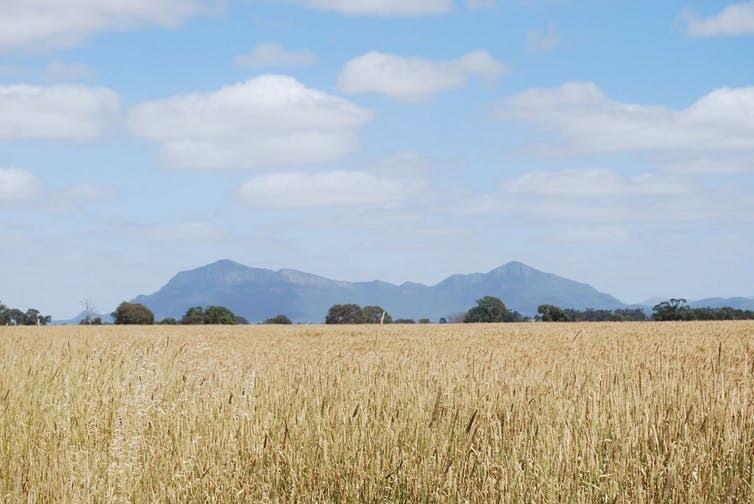
A study quantified changes in the structure of global agricultural trade under two climate change scenarios: without mitigation, the trade network becomes concentrated; with a carbon tax, it becomes more distributed and more stable.
Alongside expanding farmland and improving crop yields, growing international agricultural trade is one of the ways humanity has met its demand for food. Climate change, however, will affect agricultural production in some regions, and with it the distribution of food and, therefore, markets.
In a study published in Palgrave Communications (Nature), Dr Luciana Porfirio and CSIRO colleagues quantified changes in the structure of global agricultural trade under two climate change scenarios. The study combines data from vegetation models, which capture crop yields under different climate patterns, with a global economic model that captures market changes driven by projected yields of four crops: wheat, maize, soybean and rice.
The economic model presents one scenario with no mitigation of atmospheric CO₂ and another in which a CO₂ tax is applied to reduce carbon emissions. The results describe two scenarios that are plausible from both a biophysical and a socio-economic perspective, and suggest that global agricultural trade patterns could differ significantly from today's, with or without carbon mitigation.
More specifically, the structure of agricultural trade becomes more centralised under the high-emissions scenario, with a few regions dominating markets. Under the carbon mitigation scenario, the trade network is more distributed, with more regions involved as importers or exporters. In theory, the more distributed a network's structure, the less vulnerable the system is to climatic or institutional shocks. Mitigating CO₂ emissions therefore has the added benefit of creating a more stable agricultural trade system that can reduce food insecurity.