
May 2021
Argentina, Australia and Uruguay collaborate on climate change adaptation using crop modelling and remote sensing
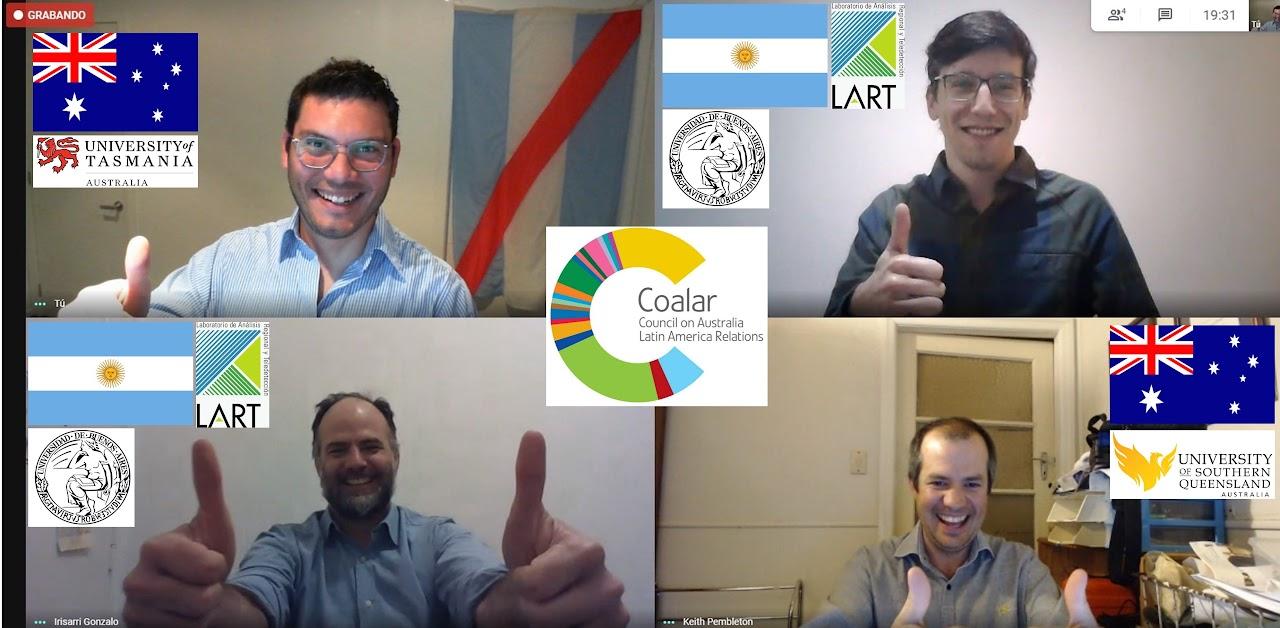
Two Argentine and two Australian universities, together with two research organisations, are assessing how mixed farming practices affect forage crop yields under different climate change scenarios.
Two Argentine universities (UBA, UNER), two Australian universities (UTAS, USQ) and two research organisations —INIA in Uruguay and AACREA in Argentina and Uruguay— began working together under the 2019 COALAR Project, funded by the Australian Department of Foreign Affairs and Trade (DFAT).
The project assesses how mixed crop–livestock practices affect forage crop yields at the regional scale under different climate change scenarios. By combining existing remote sensing techniques with a biophysical simulation model (APSIM), we evaluate the drivers of yield variability across mixed farming systems in Argentina, Uruguay and Australia.
In a relatively short time and under COVID-19 restrictions, this COALAR project laid the foundations for a solid research partnership between the Australian crop modelling teams at UTAS and USQ, the regional analysis and remote sensing laboratory at the University of Buenos Aires (LART), and the AACREA farming groups in Argentina and Uruguay: the first collaboration of its kind between research and industry organisations in Australia and Latin America.
Funded by the Council on Australia Latin America Relations (COALAR), Department of Foreign Affairs and Trade, Australian Government.