
October 2026
Argentine farmers' delegation visits CSIRO
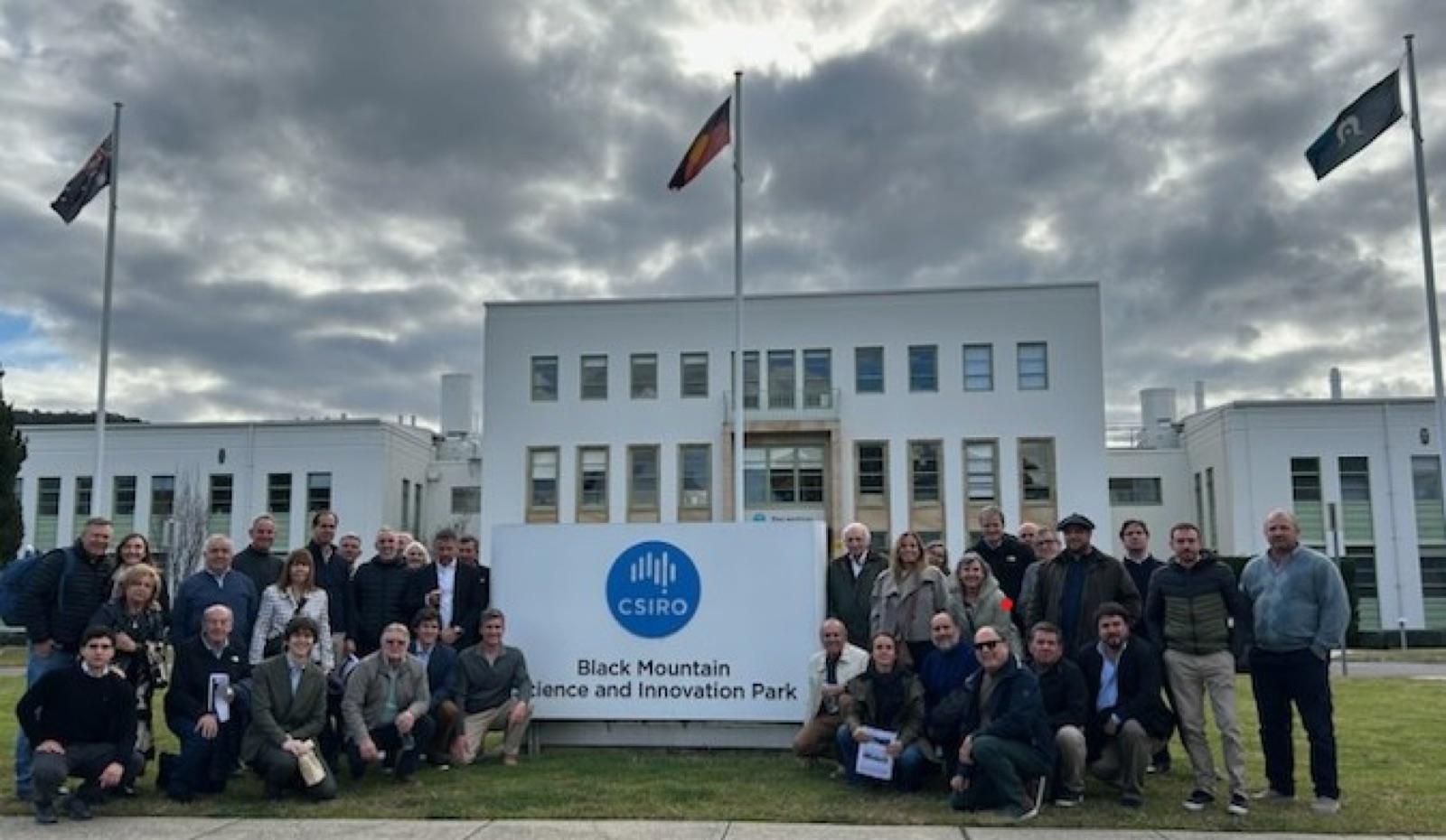
Nearly 40 Argentine farmers, business leaders and agribusiness figures toured CSIRO Black Mountain in Canberra. The visit was organised by Network member Gonzalo Estavillo, a researcher at CSIRO Agriculture & Food.
On 17 August 2026, a delegation of almost 40 Argentine farmers, business leaders and agribusiness representatives visited the CSIRO Black Mountain campus in Canberra, as part of a study tour organised by Novitas S.A. and coordinated in Australia with the support of the Argentine Embassy.
The delegation included crop and livestock producers, representatives of cooperatives and grain-marketing organisations, and companies across the agribusiness value chain. The aim of the tour was to see Australia's agricultural innovation ecosystem first-hand and to understand how research institutions such as CSIRO develop, validate and transfer scientific knowledge so that it has an impact on production.
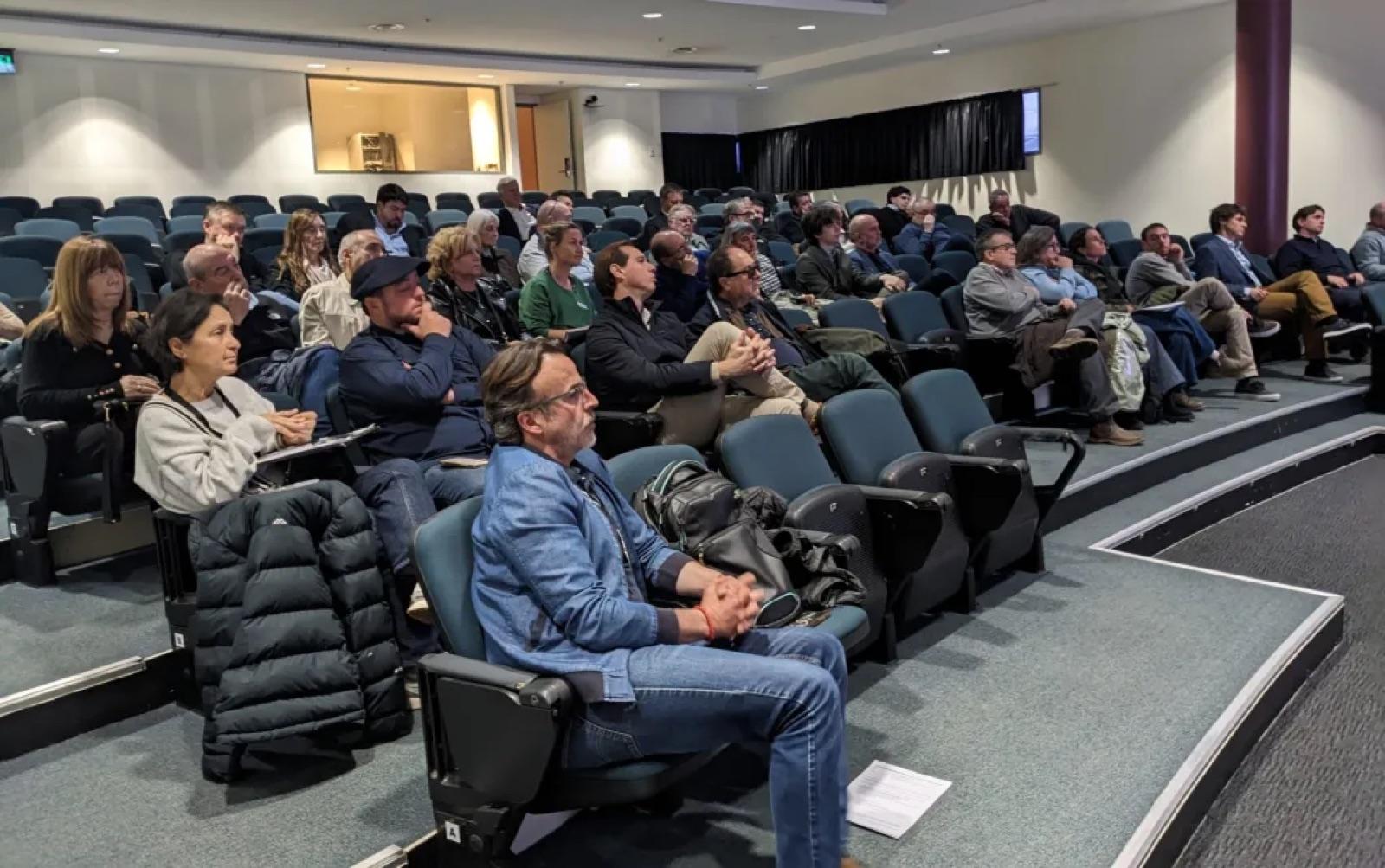
The visit was organised and coordinated by Gonzalo Estavillo, Senior Research Scientist at CSIRO Agriculture & Food and a member of the Network of Argentine Scientists in Australia, who hosted the day. Participants learned about several strategic research areas and spoke directly with scientists working on some of the main challenges facing modern agriculture.
The programme opened with an introduction to CSIRO Agriculture & Food by Dr Ben Trevaskis, who outlined the organisation's research capabilities and its role in Australia's agricultural innovation system. Enrique Erize, President of Novitas S.A., then gave a presentation on Argentine agriculture, the evolution of agricultural markets and the main challenges the sector currently faces.

Dr Fernanda Dreccer then presented CSIRO's wheat and pulse research programmes, highlighting work to improve the productivity, resilience and sustainability of cropping systems. Dr Susie Sprague shared CSIRO's research on canola (Brassica napus) production systems, including approaches to optimise agronomic management and the sustainability of this strategic crop. Finally, Dr José Barrero-Sánchez presented a case of biotechnology applied to food security in sub-Saharan Africa: the deployment of insect-resistant cowpea (Vigna unguiculata) varieties, as an example of how research translates into tangible benefits for farmers, rural communities and agricultural systems.

The organisers would like to thank Ben Trevaskis, Fernanda Dreccer, Susie Sprague and José Barrero-Sánchez for sharing their expertise with the delegation. Their contributions showcased the excellence and breadth of research at CSIRO Agriculture & Food and strengthened the links between the scientific and farming communities of Australia and Argentina.
The visit underlined the value of these exchanges for building new opportunities for collaboration, sharing experience and tackling agricultural challenges common to both countries.