July 2026
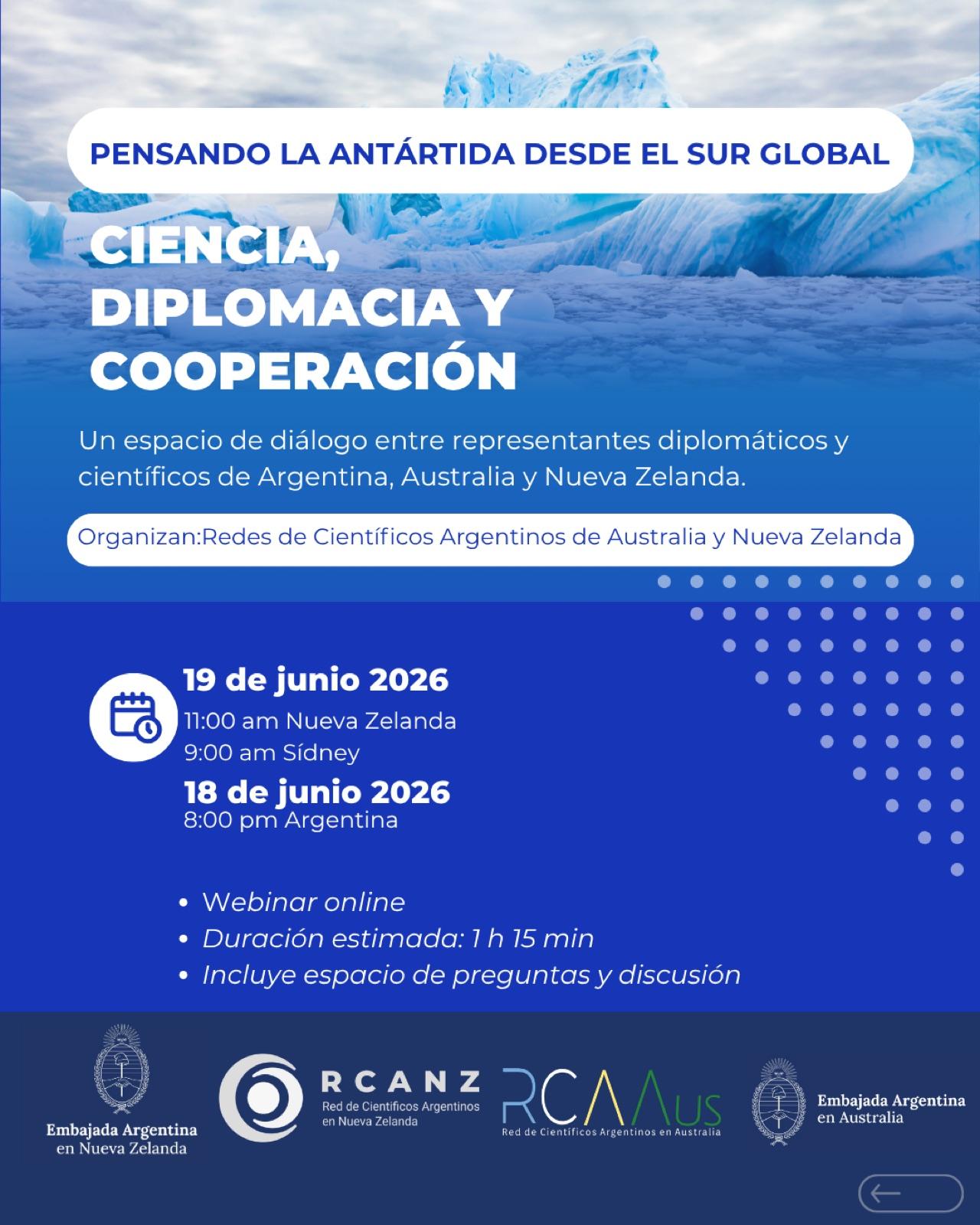
Thinking about Antarctica from the Global South: science, diplomacy and cooperation
The networks of Argentine scientists in Australia and New Zealand held a seminar on Antarctica with Argentina's ambassadors to both countries, Bruno Arpi and Gabriela Roldán.
As part of the inter-network meetings of the Networks of Argentine Scientists Abroad, a seminar on Antarctica was held on 19 June, bringing together the Argentine scientific community in Oceania. It was organised by the networks of Argentine scientists in Australia and New Zealand.
The seminar was opened by Dr Silvana Della Penna, Scientific Coordinator of the Network of Argentine Scientists in Australia, and Dr Stella Orzuza, Scientific Coordinator of the New Zealand network. Both stressed the importance of collaboration between the networks in the region and the purpose of the meeting: a seminar on Antarctica bringing together specialists in the field.
The moderator was Dr Irene Schloss, who holds a degree and a PhD in Biological Sciences from the University of Buenos Aires and completed a postdoctoral fellowship in Biological Oceanography in Canada. She is a Principal Researcher at CONICET, Deputy Director of CADIC (Southern Centre for Scientific Research) and a professor at the National University of Tierra del Fuego. For more than 25 years she has also been a researcher at the Argentine Antarctic Institute; she has taken part in ten national and international Antarctic expeditions and led numerous research projects.
Science and diplomacy
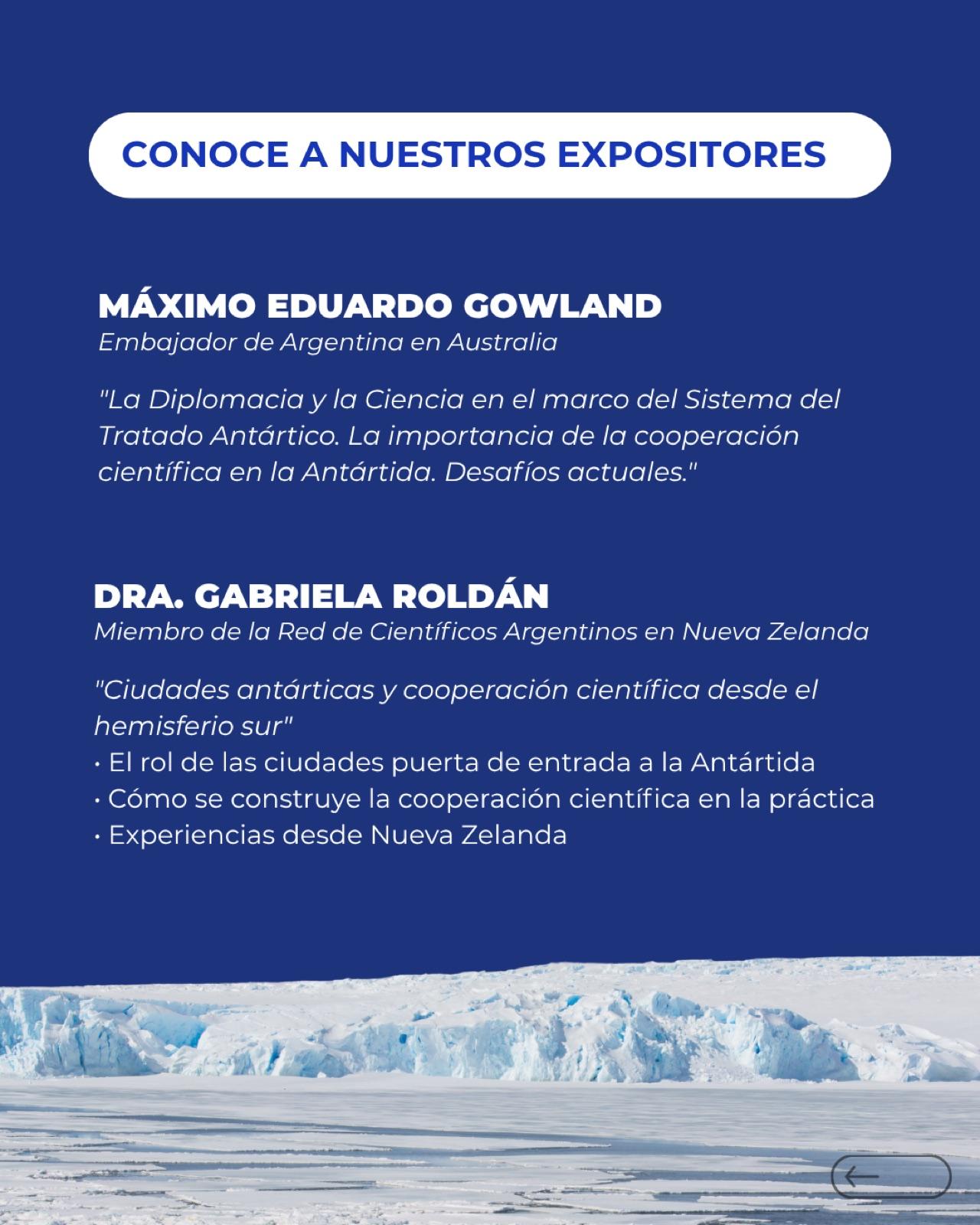
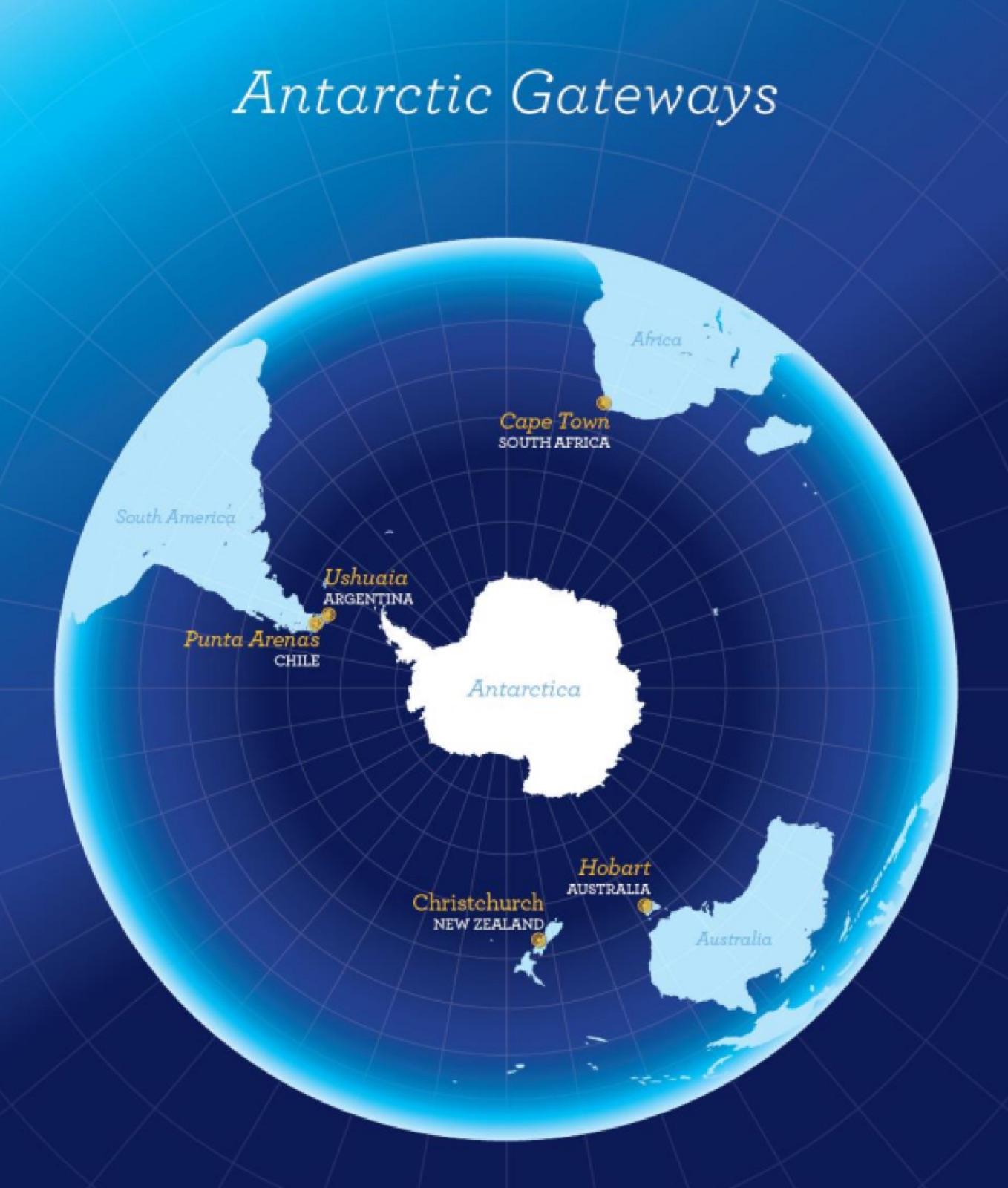
The first speaker was Argentina's Ambassador to Australia, Máximo Gowland, whose career includes postings in Australia, Fiji and Papua New Guinea and involvement in international Antarctic bodies and negotiations. He discussed the historical relationship between science and diplomacy in Antarctica and how scientific research has been the backbone of the legal frameworks governing the continent: from the 1957 International Geophysical Year and the Antarctic Treaty to the 1991 Protocol on Environmental Protection. He also highlighted the role of Argentina and the other Antarctic gateway countries — Chile, South Africa, Australia and New Zealand — in scientific and logistical cooperation, the leading role of the Argentine Antarctic Institute, and the importance of strengthening South–South cooperation among Southern Hemisphere countries with Antarctic experience.
The Madrid Protocol does not expire in 2048
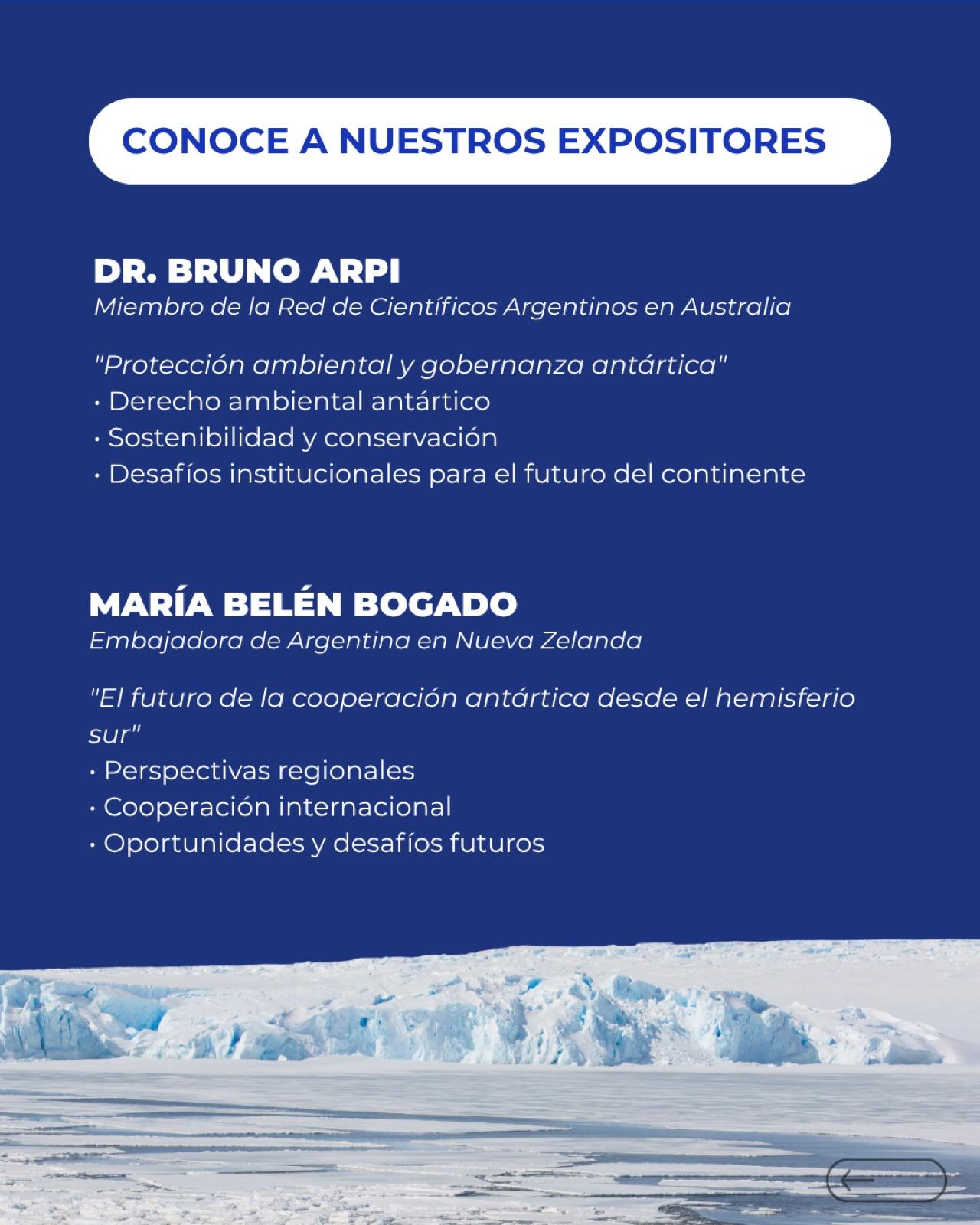
The second speaker was Dr Bruno Arpi, a member of the Network, Senior Lecturer in the Law School and co-director of the Environmental and Natural Resources Law Research Unit at Adelaide University. His work covers public international law, the law of the sea, climate change law and Antarctic law, and he is the author of Shaping the Ice: Argentina and Australia's contributions to Antarctic law. He is currently co-editing a special issue of The Polar Journal, "Responding to the Call for Reform: The Present and Future of Antarctic Governance".
Among other topics, he discussed Article 7 of the Protocol on Environmental Protection to the Antarctic Treaty (the Madrid Protocol), which states that "any activity relating to mineral resources, other than scientific research, shall be prohibited". It is widely believed that this ban automatically expires in 2048, but the Treaty and its Protocol are of indefinite duration: 2048 is only the date from which any Consultative Party may request a review conference. Lifting the ban would require a very demanding agreement among the parties and, beforehand, a binding legal regime to regulate such activity. Antarctica remains protected from commercial exploitation indefinitely.
Gateway cities
The third speaker was Dr Gabriela Roldán, a member of the network in New Zealand and a lecturer and researcher at Gateway Antarctica, the University of Canterbury's centre for Antarctic studies. With a PhD in Antarctic geopolitics, she researches Antarctic tourism, human connections with the southern polar region and the role of gateway cities in protecting it, and co-leads Scientific Committee on Antarctic Research (SCAR) groups including Ant-ICON, Ant-TAG and EDI. She has lived in Christchurch for more than two decades but often visits Ushuaia, her other home.
She described Ushuaia, Punta Arenas, Christchurch, Hobart and Cape Town as far more than departure points: these cities weave scientific knowledge, policy and logistics into everyday life. Christchurch stands out for its strategic plan grounded in Māori values and as a base for international Antarctic programmes. Cooperation between gateway cities takes both conventional and less visible forms, such as medical evacuations and quiet diplomacy; living the principles of the Antarctic Treaty is key for these communities.
The future of Antarctic cooperation
The meeting closed with Argentina's Ambassador to New Zealand, María Belén Bogado, who looked ahead at the future of Antarctic cooperation from the Southern Hemisphere. She drew together the seminar's main threads, highlighted the role of Southern Hemisphere countries — especially the gateway nations — in a shared Antarctic agenda, and underlined international cooperation as a pillar of the Antarctic Treaty System.
Finally, she invited participants to see the link between diplomacy, science and South–South cooperation as a way to consolidate the commitment of Argentina and its southern partners to protecting and studying Antarctica in the decades ahead.